
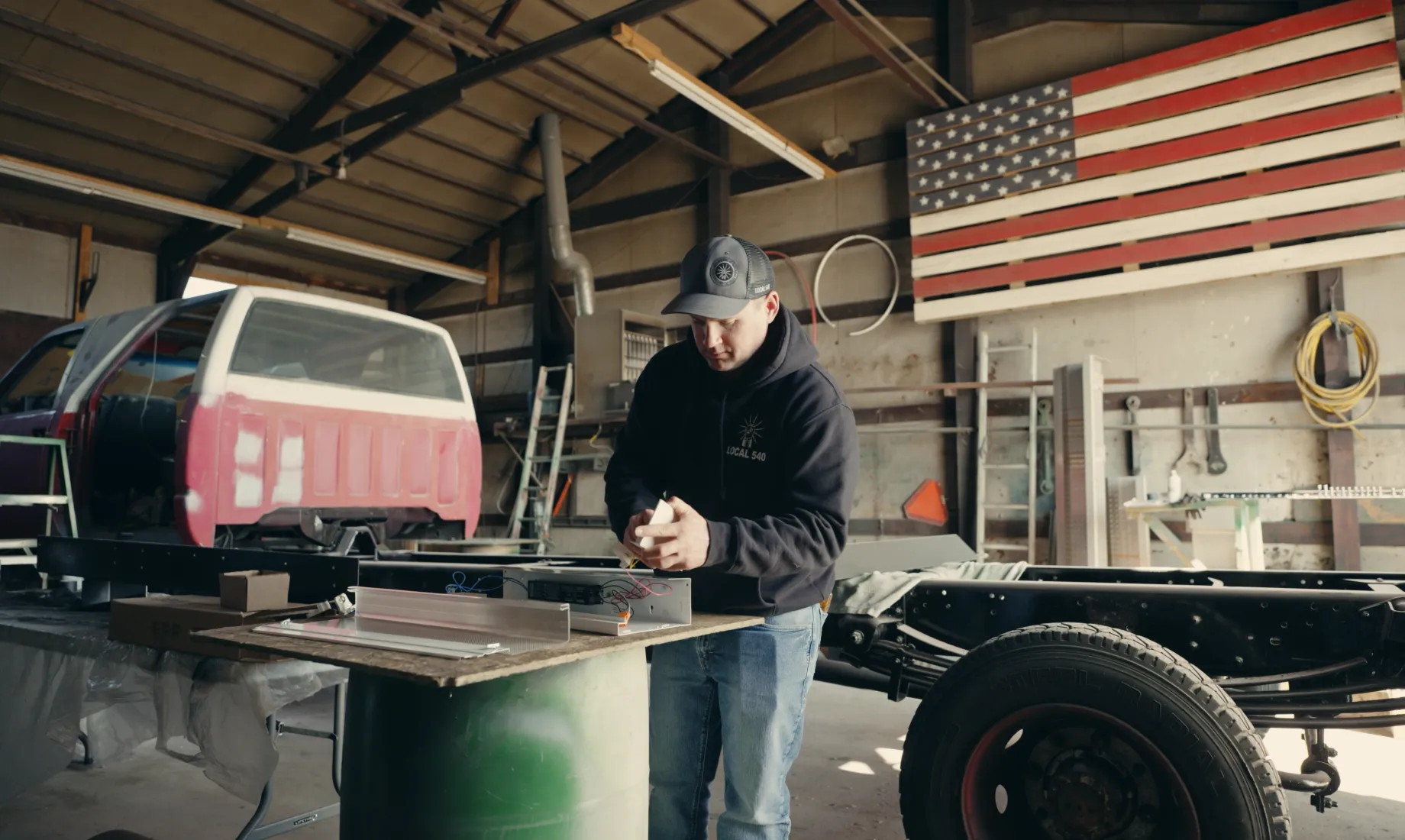
For years, many working families in rural Ohio and Pennsylvania have faced the same impossible tradeoff: leave town for work, or stay home and struggle. The disappearance of steady, local construction jobs forced electricians like Greg Bambenek to live out of a suitcase for more than a decade. “I missed birthdays, ball games, homework,” he said. “I was just trying to keep food on the table.”
That is why the arrival of solar construction projects is making such a meaningful difference. For union members, apprentices, and entire communities, these projects represent more than infrastructure. They offer something that has become increasingly rare in rural America: reliable, good-paying work close to home.
A Paycheck You Can Build a Life Around
Solar projects are large-scale construction jobs. They require hundreds of skilled electricians, and they pay union wages backed by benefits, retirement, and training. For people like Ashley Labaki, Business Development Liaison for Local 1105, that distinction is everything.
“Before my husband joined the union, we were living paycheck to paycheck,” she said. “Now we’ve bought a home, we can take vacations, and we know our future is secure.”
That kind of transformation isn’t unusual. Ashley’s local has seen its membership nearly triple over the last few years, driven by the volume of new work. And it is not just about the job count. It is about what those jobs allow families to do—stay rooted, plan ahead, and breathe.
Bringing Work Home
In a trade where travel is the norm, local jobs are more than convenient. They are life-changing. For years, union electricians often had to drive hours or relocate temporarily just to find work. Now, solar projects are flipping that script.
“When the job is right here,” said Greg, “you get to sleep in your own bed. You’re at the dinner table. You’re helping your kids with school, not doing it over the phone from four time zones away.”
The impact isn’t just personal. Local jobs keep money in the local economy. Families spend more. Kids see more of their parents. Communities thrive when workers stay.
Real Work, Real Pride
For many in the trades, the value of work isn’t just in the paycheck—it is in the pride of building something that lasts. Logan Hammer, a young electrician supporting a family on a single income, sees that pride in solar.
“You drive past one of those arrays and think, I helped build that,” he said. “All those homes getting power, I’m a part of that. It means something.”
He also sees solar as a way to reach more people who might not think they belong in the trades. “You don’t need a college degree to have a good life,” he said. “You need opportunity, and this work gives it.”
Laying the Groundwork for the Next Generation
Solar projects aren’t just bringing in paychecks. They are creating the foundation for long-term careers in the trades. Many electricians begin their journey on solar sites and go on to wire schools, hospitals, and factories. “That first job can launch a whole career,” said Pat Hook, business manager of IBEW 683.
With more projects in development across the region, that pipeline of opportunity is expanding. Pat said it plainly: “If even half the projects move forward, we’re going to need a lot more people. That means more apprentices, more families supported, and a stronger local economy.”
Apprenticeship numbers are already soaring. “We used to take in 20 to 30 first-year apprentices,” said Ashley. “Now we’re taking in classes of over 100. And we’re still growing.”
The Bottom Line
Solar jobs are not just about energy. They are about giving people a way to stay. To build. To be proud. They are jobs that support families, strengthen communities, and bring stability back to places that need it most.
“This isn’t about chasing trends,” Ashley said. “It’s about bringing real work back home—and building lives around it.”