
By Nick A, IBEW Local 26
Solar changed my life.
The first time I worked on a solar project, I saw the bigger picture. This wasn’t just another job. It was a real path: one with training, steady work, and the kind of future you can build without needing a college degree.
My name’s Nick. I’m 27, IBEW Local 26, from the Roanoke region. Eight years ago, I was stacking boxes in a warehouse, waiting for a promotion that never came. I didn’t even know what conduit was. A family friend encouraged me to take the IBEW aptitude test. I passed, joined LU 26, and spent five years learning the trade in classrooms, on poles, and on real jobs that taught me how to do the work right.
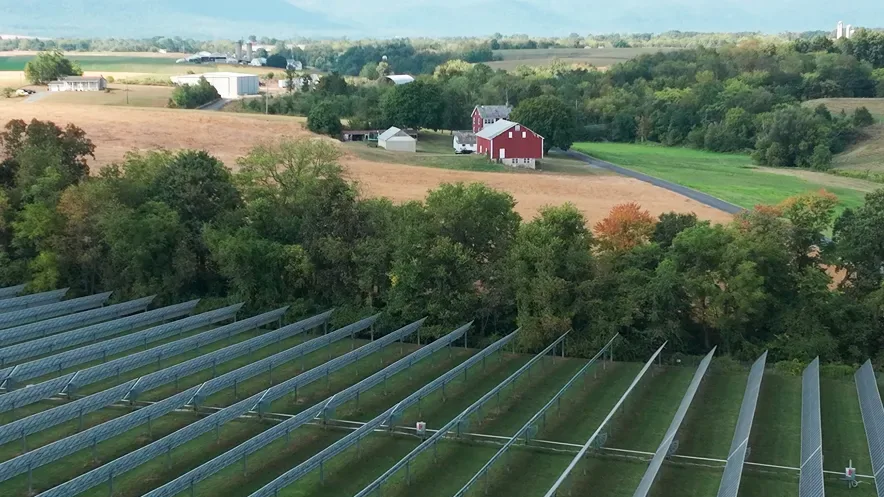
When I got to that first solar site, it just made sense. The steps, the process, the structure; it all clicked. I saw how this work could support a career, not just a paycheck. The job itself is straightforward, and when you’ve got trained crews and strong standards, it runs smooth. Solar quickly became one of the most consistent and rewarding types of work I do.
Today, I’m a lineman with more than 200 days on the job this year. I’ve worked projects in Indiana, Ohio, and Virginia. A lot of folks where I’m from call Roanoke a “suitcase local – some union members find solid work at home, but many have to go where the jobs are. That’s why projects close to home matter.
When solar comes to a town, and it’s planned right and built union, it does more than power the grid. It creates career paths, builds up the local workforce, and keeps money moving through the community. IBEW gave me a shot at a future I never imagined. Today, I’m earning over $100K without a college degree. That’s not a fluke. That’s a real pathway that’s open to others, too.
Even if I don’t stay in Roanoke forever, I want the next generation in my hometown to have the kind of chances that keep them rooted if they want to be. I see new apprentices coming up through Local 26 who deserve stable, local careers so they can start families, buy homes, and invest in their communities.
What gives people confidence in solar is knowing who’s doing the work. When communities see union electricians and local apprentices on-site, they know the job is getting done right and that the benefits stay close to home.
When it’s done right, solar projects create local careers and long-term opportunities. That’s something every town can use.