
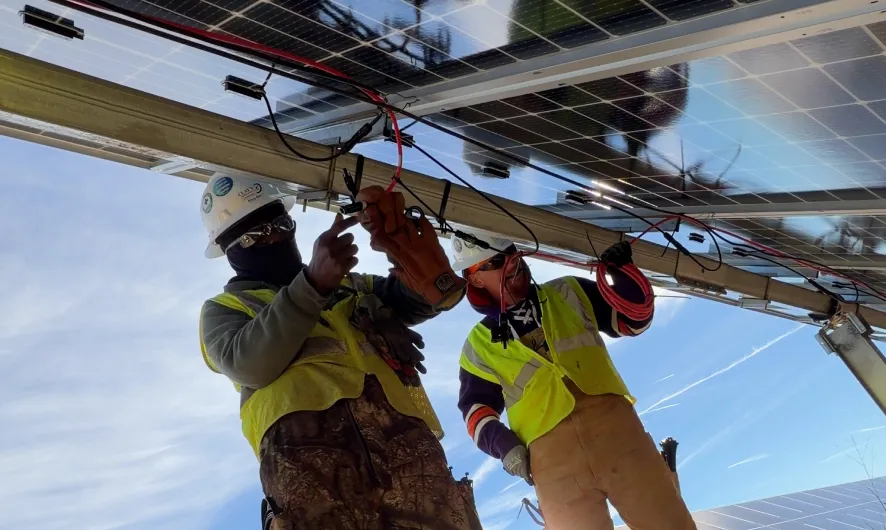
Renewable energy is often portrayed as if it comes to a community fully formed: A developer selects a site, the project is announced, and everyone has to get on board. But anyone who has watched energy projects succeed (or stall) knows that nothing happens until people show up to do the work.
Developers who want their solar projects approved and completed should partner with local union labor from day one. When work is done by trained, local electricians and tradespeople, a project arrives with credibility built in. Neighbors see familiar faces on site. Questions get answered by people who will still be in the town long after construction wraps. That familiarity prevents concerns from hardening into organized opposition and keeps momentum moving from permitting to production.
Labor-built renewable energy keeps money and skills in the community. Union jobs come with apprenticeships, ongoing training, fair wages, and benefits that circulate through local stores and community services. In Columbus, OH, the local IBEW membership invested in solar training and saw a tremendous payoff.
“In the last few years, we’ve had hundreds of members work on solar projects and probably earn millions of dollars in wages and benefits,” says Pat Hook, business manager of Local 683. “All that investment goes back into the community right here.”
There’s another, less visible benefit: accountability.
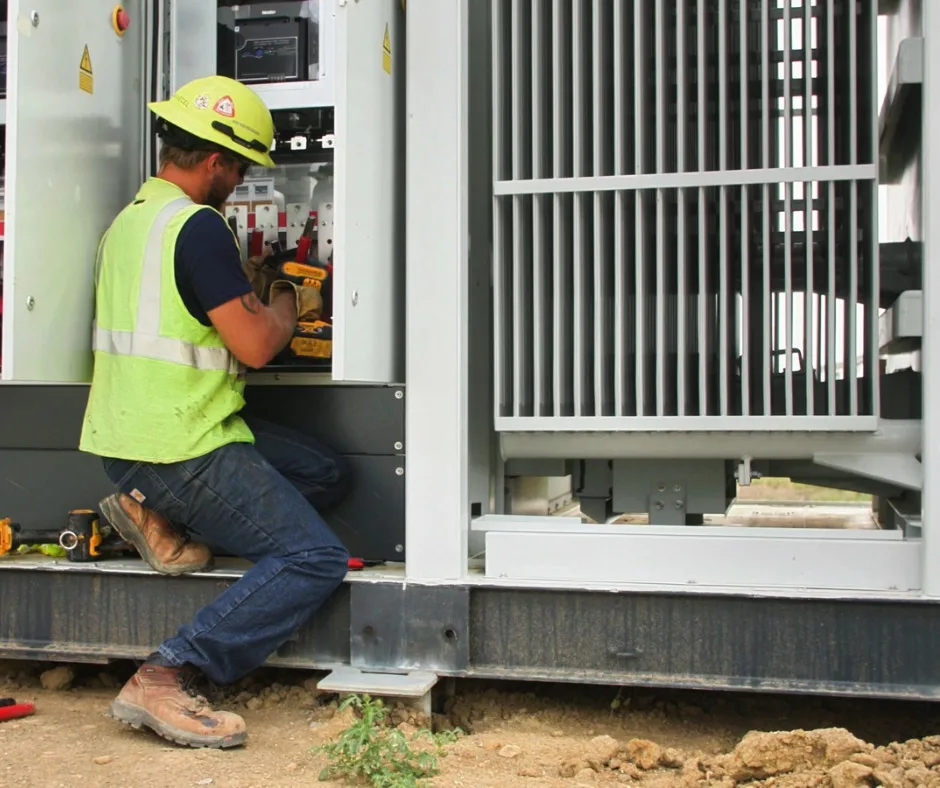
Local union crews have a stake in the place where the panels stand. They drive the same roads, raise their kids in the same schools, and answer to neighbors. That connection leads to a sense of ownership amongst the local workforce and reduces the risk of quality problems, safety lapses, and the kinds of reputational hits that slow future approvals. When developers hire transient, out-of-town crews, the work can look temporary; when developers hire local labor, the project looks like part of the community’s future.
As Charles Skelly, Business Manager at IBEW Local 666 in Richmond, Virginia puts it, “We’ve been intentionally engaging with developers in the solar industry, trying to make sure they understand the value that the IBEW can bring to their projects. I think this is going to be a growing sector of our market, and we’re looking forward to doing it.”
For developers, the practical takeaway is simple: partnering with local unions speeds approvals, reduces conflict, and delivers higher-quality, longer-lasting projects. If your goal is to get projects permitted, built, and protected, choose workforce strategies that are rooted locally, supported by unions, and transparent to the community.
Bring local union labor to the table first, and build a future the whole county can stand behind.